


Why Compressor Redundancy in Remote Refrigerator Systems Is Now a Non-Negotiable for North American Warehouse-Style Stores
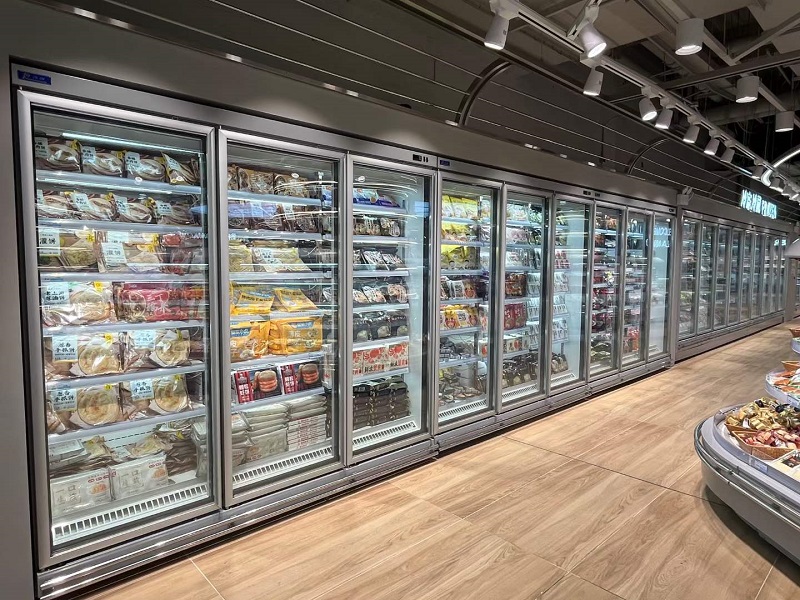
In September 2025, a major North American grocery retailer’s frozen food distribution centre in Toronto went down. The cause was not a cyberattack or a supply chain collapse. It was a mechanical issue inside the refrigeration system. The facility stayed offline for nearly two months. The net after-tax financial hit reached approximately $22 million in a single quarter, driven primarily by unsalvageable frozen inventory, with additional non-recurring costs spilling into the following quarter. The retailer later confirmed that the mechanical issue had affected “several components of the refrigeration system,” and that the repairs were “complex”.
For warehouse-style stores across North America—club formats, supercenters, and large-format grocery operations—that number is not a distant corporate headline. It is a direct illustration of what happens when a remote refrigerator architecture concentrates cooling responsibility into a system with no meaningful standby capacity. A remote refrigerator moves the compressor and condenser outside the sales floor, which is excellent for store ambiance and energy management. But it also means that when the centralized mechanical asset fails, every case connected to it rises in temperature at the same time.
This is why compressor redundancy has shifted from an engineering preference to a baseline procurement requirement. The question for North American warehouse-style operators is no longer whether to specify redundancy in a remote refrigerator system, but how to specify it without over-engineering the plant.
Key Takeaways
A single-compressor remote refrigerator is a single point of failure. When the mechanical asset that serves an entire frozen aisle goes down, inventory loss and regulatory exposure accumulate simultaneously.
Warehouse-style stores face structurally higher exposure because of inventory density, continuous operating intensity, and cold-holding inspection requirements.
Redundancy does not mean oversizing. A modular N+1 configuration (for example, multiple compressors at partial capacity) can deliver business continuity without installing an idle 100% standby unit.
The specification should define performance, not compressor count. State the acceptable temperature rise and time-to-restore during a single-compressor failure, and require the control sequence to be commissioned under simulated failure conditions.
Dashang’s remote refrigerator platforms are engineered for retail duty, with temperature ranges spanning chilled (3~8°C) and deep-frozen (−18~−22°C), R290 and R404A refrigerant options, and export-market certifications (CE, ETL, ISO) that North American buyers require.
What Compressor Redundancy Actually Means in a Remote Refrigerator System
A remote refrigerator system relocates the compressor and condenser outside the sales area, piping refrigerant to display cases and walk-in coolers inside. This removes heat and noise from the shopping environment, but it also consolidates the cooling burden into a centralized mechanical asset. If that asset fails, every connected case is affected.
Compressor redundancy solves this by distributing the cooling load across multiple compressors operating in parallel. In a parallel rack configuration, compressors share common suction and discharge headers, liquid receivers, and controls. When one compressor drops offline—due to a mechanical fault, an electrical issue, or scheduled service—the remaining compressors continue to operate and redistribute the load. The result is a controlled temperature deviation rather than a system-wide shutdown.
The contrast with a traditional single-compressor remote refrigerator is not incremental. It is the difference between a service call and an inventory loss event. Industry design guidance for commercial refrigeration is explicit: build in N+1 redundancy, and use controls that keep equipment efficient at part load. A modular configuration—such as three compressors each sized at 50% of design load—provides operational reliability without the inefficiency of a large standby machine that sits idle for most of the year.
Why Warehouse-Style Stores Are Structurally More Exposed
Warehouse-style retail concentrates risk in ways that a conventional supermarket does not. Three factors make compressor redundancy in a remote refrigerator system especially urgent for this format.
Inventory density and financial concentration. Warehouse formats carry deeper inventory per linear foot of refrigerated display than conventional stores. A temperature event does not spoil a few shelves; it jeopardizes pallet-level stock across multiple frozen and chilled categories. The Toronto distribution centre case demonstrated that a single refrigeration system failure can produce a $22 million after-tax impact in one quarter, with costs continuing into the next. At store level, the absolute number may differ, but the asymmetry between a compressor repair invoice and an inventory write-down remains the same.
Continuous operating intensity. Warehouse-style stores run extended hours, high door-opening frequency, and near-continuous compressor duty. A remote refrigerator system in this environment is not idling; it is cycling aggressively to meet load swings. Compressors in a non-redundant rack wear faster, and the probability that a failure occurs during peak trading hours—when commercial consequence is highest—increases accordingly.
Regulatory and audit pressure. Retail food establishments are inspected on their ability to maintain required cold-holding temperatures. While the FDA Food Code does not prescribe a specific redundancy configuration, an operator who cannot demonstrate temperature control during a compressor failure faces an exposure that extends beyond spoiled product. Redundancy in the remote refrigerator system is, in practical terms, a control that protects both inventory and regulatory standing.
Single Compressor vs. Parallel Rack Redundancy: A Direct Comparison
| Design Factor | Single-Compressor Remote Refrigerator | Parallel Rack with N+1 Redundancy |
|---|---|---|
| Failure consequence | Entire connected load rises in temperature | Load redistributed; controlled deviation |
| Service interruption | System-level shutdown until repair | Failed compressor isolated; remaining units continue |
| Maintenance access | Rack often fully offline for repair | Isolation valves allow component service under load |
| Capacity alignment | Often oversized or undersized at part load | Modular staging matches real demand more closely |
| Warehouse-style fit | High exposure per circuit | Designed for continuity across critical circuits |
How to Specify Redundancy Without Over-Engineering
Redundancy is not about maximizing compressor count. It is about matching standby capacity to the operational criticality of the load. Three specification questions determine the right level of redundancy for a warehouse-style remote refrigerator installation.
First, what is the acceptable temperature deviation during a single-compressor failure? Deep-frozen circuits serving high-value inventory typically tolerate less deviation than medium-temperature chilled circuits. The specification should state a maximum allowable temperature rise and a maximum time-to-restore, rather than leaving the redundancy target to the contractor’s interpretation.
Second, does the control architecture actually redistribute capacity when a compressor drops offline? A rack with multiple compressors but no automatic load-shedding logic is only nominally redundant. The control sequence must activate standby capacity and restage the remaining compressors without requiring manual intervention. This should be verified during commissioning under simulated failure conditions, not assumed from a datasheet.
Third, can a failed compressor be isolated and replaced while the remaining compressors continue to serve the load? Suction and discharge isolation valves, accessible component layout, and adequate service clearance determine whether redundancy performs as intended in a real failure event. Redundancy that requires taking the entire rack offline for repair is not redundancy in any operationally meaningful sense.
Where Dashang Fits the Redundancy Conversation
Dashang manufactures remote refrigerator systems for retail environments where cooling continuity is a operational requirement, not a convenience. The Eivissa Sliding Glass Door Merchandiser line is a remote refrigerator platform: the compressor is relocated outdoors, eliminating in-store heat and noise while concentrating cooling responsibility in a centralized system that can be configured for parallel operation. The platform supports both chilled (3~8°C) and deep-frozen (−18~−22°C) temperature levels, with R290 and R404A refrigerant options and fixed-speed compressor configurations suited to continuous commercial duty.
For North American warehouse-style buyers, the more relevant consideration is the manufacturing and compliance infrastructure behind the platform. Dashang holds CE, ETL, and ISO certifications, alongside a portfolio of product patents and national high-tech enterprise recognition. The company serves supermarket and retail clients across 70+ countries, including projects where remote refrigerator deployment required coordination across layout planning, equipment selection, and installation sequencing. Compressor redundancy is an architectural property of the system. It depends on a manufacturer who understands how that architecture behaves under real load, real service conditions, and real regulatory scrutiny—not simply on a compressor count printed on a specification sheet.
Frequently Asked Questions
Q: Does compressor redundancy significantly increase the cost of a remote refrigerator system?
It increases the compressor-side capital cost, but the relevant comparison is against the cost of a single failure event. A $22 million quarterly impact from one refrigeration system issue illustrates that redundancy is often cheaper than the exposure it mitigates. The appropriate question is not “what does redundancy cost?” but “what is the cost of non-redundancy per critical circuit?”
Q: Does the FDA Food Code require redundant compressors in retail refrigeration?
The FDA Food Code does not prescribe a specific redundancy configuration. It requires equipment sufficient to maintain required food temperatures, and retail establishments are inspected on cold-holding capability. Redundancy is a design strategy for meeting that requirement under foreseeable failure conditions, not a prescriptive mandate.
Q: How many compressors constitute “adequate” redundancy for a warehouse-style store?
There is no universal number. The correct specification depends on the temperature level of the load, the acceptable temperature deviation during a failure, and the time required for service restoration. A frozen circuit serving high-value inventory typically warrants a higher redundancy margin than a chilled circuit serving lower-risk categories. State the performance requirement, not the compressor count.
Q: Can redundancy be added to an existing remote refrigerator system, or must it be designed in from the start?
Parallel rack architecture is most cost-effectively designed into a new installation, because it determines piping, headers, controls, and mechanical room layout. Retrofitting meaningful redundancy into a single-compressor remote refrigerator system is often constrained by physical space and control limitations. For warehouse-style stores planning new construction or major renovation, redundancy should be specified at the design stage.
Q: How does Dashang support buyers who need to specify redundancy?
Dashang provides remote refrigerator platforms—including the Eivissa merchandiser line—with multiple compressor configuration options, R290 and R404A refrigerant compatibility, and export-market certifications including CE, ETL, and ISO. The company’s project experience spans supermarket and warehouse-style retail deployments across 70+ countries, and its engineering team can work from layout drawings and load requirements to define a rack configuration aligned with the operator’s redundancy target. Contact Dashang with your store format, temperature circuits, and acceptable failure tolerance to begin a specification review.


